Shockwave Therapy for Cellulite
An evidence-based look at acoustic wave therapy for cellulite reduction
Key Takeaways
- Acoustic wave therapy can produce modest improvements in cellulite appearance and skin texture -- improvement, not elimination
- A typical course involves 6-12 sessions spaced twice weekly or weekly, costing $1,200-$6,000 total
- Not FDA-cleared for cellulite -- classified as an off-label aesthetic use of shockwave technology
- Evidence is strongest for Grade 1-2 cellulite and when combined with regular exercise
- Results tend to diminish over time -- maintenance sessions every 3-6 months are typically recommended to sustain improvements
What Is Cellulite?
You’ve noticed the dimpled, uneven skin texture on your thighs, buttocks, or hips – and you’re far from alone. Cellulite affects an estimated 80 to 90% of post-pubertal women, making it one of the most common aesthetic concerns in dermatology. Despite its prevalence, cellulite is widely misunderstood, and the market is flooded with products and treatments that promise far more than they deliver.
Cellulite is a structural condition of the skin and subcutaneous tissue. It occurs when fat deposits push through the connective tissue (fibrous septae) beneath the skin, creating the characteristic dimpled or “orange peel” appearance. The condition is not caused by excess fat alone – genetics, hormonal factors, skin thickness, and the architecture of connective tissue all play significant roles.
The Nurnberger-Muller scale classifies cellulite into three grades:
- Grade 1: Dimpling visible only when the skin is pinched or compressed
- Grade 2: Dimpling visible when standing but not when lying down
- Grade 3: Dimpling visible both when standing and lying down
Women are more susceptible than men because female connective tissue septae run vertically (perpendicular to the skin surface), allowing fat to protrude upward. In men, the septae form a cross-hatched pattern that holds fat more evenly beneath the skin.
Traditional treatments range from topical creams (minimal evidence) and massage (temporary results) to more invasive options like subcision and laser-assisted lipolysis. In this landscape, acoustic wave therapy – a specific application of shockwave technology – has emerged as a non-invasive option with modest but measurable evidence. It is important to approach this treatment with realistic expectations: the research is promising but not overwhelming.
How Shockwave Therapy Works for Cellulite
Acoustic wave therapy (AWT) for cellulite uses radial pressure waves – the same technology class as radial shockwave therapy used in musculoskeletal medicine, but applied with different protocols and treatment goals. Some providers also use focused shockwave devices, though radial devices are more commonly studied for this application.
The proposed mechanisms by which acoustic waves address cellulite include:
- Mechanical disruption of fibrous septae. The rigid connective tissue bands that pull the skin downward and create the dimpled appearance may be softened or partially disrupted by the mechanical energy of the pressure waves. This can reduce the tension that creates visible dimpling.
- Stimulation of collagen remodeling. Acoustic waves trigger mechanotransduction (the process by which cells convert mechanical force into biological signals), leading to increased collagen and elastin production in the dermis. This may improve skin thickness and elasticity, making cellulite less visible.
- Increased local blood flow. The mechanical stimulation promotes vasodilation and neovascularization (new blood vessel formation), improving circulation in the treated area. Better blood flow supports connective tissue health and may enhance lymphatic drainage.
- Activation of lipolysis. Some research suggests that acoustic waves may stimulate the breakdown of fat cells in the subcutaneous layer, though this effect is less well-established than the connective tissue and collagen effects.
FDA status: Acoustic wave therapy for cellulite is considered an off-label, aesthetic use. ESWT devices are not specifically FDA-cleared for cellulite reduction. Some acoustic wave devices are marketed as cosmetic or wellness devices rather than medical devices, which places them in a different regulatory category. Patients should be aware that this distinction affects both oversight and insurance coverage.
What the Research Says
The evidence for acoustic wave therapy in cellulite treatment is growing but remains modest compared to the evidence base for musculoskeletal applications of shockwave therapy. Here is what the published research shows:
Angehrn et al. (2007) published one of the early clinical studies examining acoustic wave therapy for cellulite in the Journal of Cosmetic and Laser Therapy. The study treated 21 women with cellulite on the thighs and buttocks using radial acoustic waves over 6 sessions. Results showed measurable improvement in skin elasticity and cellulite severity scores. Circumference measurements also decreased in treated areas. However, the study lacked a control group, which limits the strength of its conclusions.
Knobloch et al. (2013) conducted a randomized controlled trial comparing focused ESWT combined with a targeted exercise program versus exercise alone for cellulite of the buttocks. Published in the Journal of Cosmetic and Laser Therapy, the study found that the group receiving focused shockwave therapy plus exercise showed significantly greater improvement in cellulite severity compared to exercise alone. The combination approach was superior, though the exercise-only group also improved – suggesting that physical activity plays an important complementary role.
Christ et al. (2008) studied radial acoustic wave therapy in a prospective trial of 59 women with Grade 2-3 cellulite. Published in Aesthetic Surgery Journal, the study reported improvement in skin texture and cellulite appearance after 8 sessions. The researchers noted measurable increases in dermal collagen content and skin elasticity, providing some objective support for the clinical observations.
Russe-Wilflingseder et al. (2013) published results from a multicenter trial examining a specific acoustic wave device for cellulite reduction. The study included 34 women treated with 8 sessions over 4 weeks. At follow-up, 91% of patients and 76% of blinded evaluators rated the results as improved. Ultrasound measurements confirmed increased dermal thickness. The high patient satisfaction rates were notable, though blinded evaluator ratings were more conservative.
Hexsel et al. (2017) investigated acoustic wave therapy for cellulite in a controlled study published in Dermatologic Surgery. The researchers found modest but statistically significant improvements in cellulite severity, with benefits persisting at 12-week follow-up. They noted that the treatment appeared to work better on Grade 1-2 cellulite than on severe Grade 3 cellulite.
Evidence summary
Research suggests that acoustic wave therapy can produce modest improvements in cellulite appearance, skin texture, and skin elasticity. The evidence base includes several controlled studies, but many are limited by small sample sizes, lack of long-term follow-up, and variability in devices and protocols used. Results are typically described as “improvement” rather than “resolution” – patients should expect a reduction in cellulite severity, not elimination. The treatment appears most effective when combined with exercise and for Grade 1-2 cellulite. Evidence for severe Grade 3 cellulite is less convincing.
What to Expect During Treatment
Acoustic wave therapy for cellulite is typically performed in dermatology practices, aesthetic clinics, medical spas, or sports medicine clinics that offer body contouring services:
Before treatment: Your provider will assess your cellulite grade and distribution, discuss realistic expectations, and may take baseline photographs for comparison. No special preparation is typically required, though staying well-hydrated is generally recommended. Some providers recommend avoiding blood-thinning medications for 24 to 48 hours before treatment to minimize bruising risk.
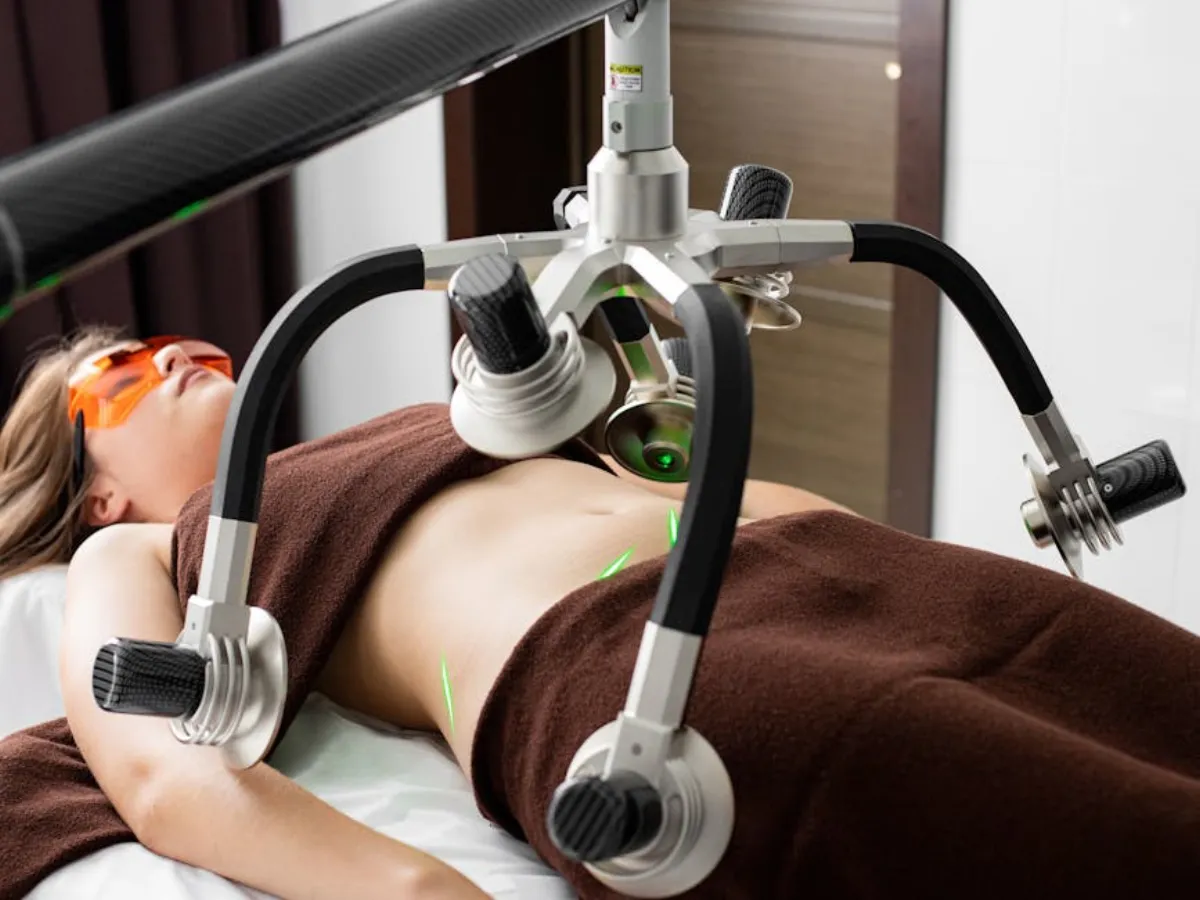
During the session: You’ll be positioned to expose the treatment area – most commonly the thighs, buttocks, or hips. The provider applies a generous layer of coupling gel to the skin. The radial shockwave handpiece is then moved systematically across the treatment area in overlapping passes.
A typical session involves 2,000 to 4,000 pulses per treatment zone, with energy settings lower than those used for musculoskeletal conditions. The frequency is usually set between 10 and 15 Hz, creating a rapid vibrating sensation. The provider covers the entire affected area rather than focusing on a single point.
The sensation is often described as a vigorous, deep vibration – similar to a strong massage tool. Most patients rate the discomfort at 2 to 4 on a 10-point scale, significantly less intense than shockwave therapy for tendon conditions. Sensitive areas near bone (such as the outer thigh near the hip) may feel slightly more intense.
A session treating both thighs and buttocks takes approximately 20 to 40 minutes.
After treatment: Mild redness and warmth in the treated area are common and typically resolve within a few hours. Some patients experience light bruising or tenderness that fades within 1 to 3 days. There is no downtime – patients can resume all normal activities immediately, including exercise.
Number of Sessions & Recovery Timeline
Treatment protocols for cellulite typically involve 6 to 12 sessions, spaced twice weekly or once weekly depending on the provider’s protocol and the specific device used. This is a more extended treatment course than most musculoskeletal shockwave protocols, reflecting the different treatment goals (aesthetic tissue remodeling versus tendon healing).
Typical progression:
- After sessions 1-3: Most patients notice mild, temporary improvements in skin texture and softness. The skin in the treated area may feel smoother to the touch. Visible changes in dimpling are minimal at this stage.
- After sessions 4-6: More noticeable changes in skin texture typically begin to appear. Some patients report that dimpling is less prominent, particularly in areas with Grade 1-2 cellulite. Skin may appear firmer.
- After sessions 7-12 (full course): Maximum improvement is usually observed. Skin texture improvements continue to develop for several weeks after the final session as collagen remodeling continues.
- 4-8 weeks after final session: The full benefit of treatment becomes apparent. Collagen remodeling and connective tissue changes continue to develop during this period.
Results vary significantly between individuals. Factors that influence outcomes include cellulite grade, skin type, age, overall health, and whether the patient combines treatment with exercise and healthy lifestyle habits.
Maintenance: Unlike musculoskeletal shockwave therapy where a single treatment course often provides lasting benefit, cellulite treatment results tend to diminish over time. Many providers recommend periodic maintenance sessions – typically every 3 to 6 months – to sustain results.
Cost & Insurance Coverage
Acoustic wave therapy for cellulite typically costs $200 to $500 per session, with a full course of 6 to 12 sessions totaling $1,200 to $6,000. Pricing varies significantly by geographic location, provider type, and the extent of the treatment area.
Insurance coverage: Cellulite treatment is considered an aesthetic procedure. It is not covered by health insurance, including plans that may cover shockwave therapy for FDA-cleared musculoskeletal indications. Payment is out-of-pocket. FSA and HSA accounts generally do not cover cosmetic procedures, though patients should check with their plan administrator for specific policies.
Cost comparison with alternative cellulite treatments:
- Topical creams and massage: $30-$200/month (minimal evidence for sustained results)
- Radiofrequency treatments (Velashape, etc.): $300-$600 per session, 6-10 sessions typical
- Subcision (Cellfina): $3,500-$6,500 (single treatment, more invasive)
- Laser-assisted lipolysis (Cellulaze): $5,000-$10,000 (single treatment, minimally invasive)
- Acoustic wave therapy: $1,200-$6,000 total course (non-invasive, requires multiple sessions)
When comparing costs, consider the invasiveness of the procedure, the number of sessions required, and the duration of expected results. Acoustic wave therapy sits in the middle range: less expensive than surgical or laser options, but requiring more sessions than single-treatment procedures. For more details on shockwave therapy costs across conditions, see our comprehensive cost guide.
Who Is a Good Candidate?
Acoustic wave therapy for cellulite may be worth considering for patients in specific situations:
Good candidates typically include:
- Individuals with Grade 1-2 cellulite who are looking for non-invasive improvement (the evidence is strongest for mild-to-moderate cellulite)
- Patients who are near their target body weight and want to address skin texture rather than reduce fat volume
- Individuals willing to combine treatment with regular exercise – the research suggests combination approaches produce better results than acoustic wave therapy alone
- Patients seeking a non-invasive option who are not ready for or interested in procedures like subcision or laser treatment
- Individuals with realistic expectations – improvement in appearance, not elimination of cellulite
Acoustic wave therapy may not be the best fit for:
- Patients expecting dramatic or complete cellulite elimination – no treatment achieves this, and acoustic wave therapy produces modest improvements
- Individuals with severe Grade 3 cellulite – the evidence for significant improvement in advanced cases is limited
- Patients seeking fat reduction or weight loss – this is not a fat removal treatment
- Pregnant individuals
- Patients with active skin infections, open wounds, or inflammation in the treatment area
- Individuals with blood clotting disorders or on anticoagulant therapy
- Patients with malignancy in or near the treatment area
Important considerations:
Cellulite is a normal anatomical variation, not a medical condition requiring treatment. The decision to pursue treatment is entirely personal and aesthetic. No provider should frame cellulite as a health problem or pressure patients into treatment.
If you decide to explore acoustic wave therapy, look for a provider who is transparent about the modest evidence base, sets realistic expectations, and has experience with this specific application. Ask about their device type, protocol, expected number of sessions, and what outcomes they typically see in their practice. Providers who offer acoustic wave therapy alongside other aesthetic services – and who can advise on exercise and lifestyle strategies – may offer a more comprehensive approach.
Learn More
Explore our complete guide to shockwave therapy conditions or browse our latest research and articles to learn more about ESWT treatment options.
References
- Angehrn F, Kuhn C, Voss A. Can cellulite be treated with low-energy extracorporeal shock wave therapy? J Cosmet Laser Ther. 2007;9(4):218-224.
- Knobloch K, Kraemer R. Extracorporeal shock wave therapy (ESWT) for the treatment of cellulite – a current meta-analysis. Int J Surg. 2015;24(Pt B):210-217.
- Christ C, Brenke R, Gero D, et al. Improvement in skin elasticity and dermal revitalization in the lower extremity after extracorporeal shock wave treatment for cellulite. Aesthetic Surg J. 2008;28(4):439-447.
- Russe-Wilflingseder K, Russe E, Gunes Z, et al. Multicenter evaluation of acoustic wave therapy for the treatment of cellulite. J Cosmet Laser Ther. 2013;15(3):159-162.
- Hexsel D, Camozzato FO, Silva AF, Siega C. Acoustic wave therapy for cellulite, body shaping, and fat reduction. Dermatol Surg. 2017;43(2):S187-S196.
- Knobloch K, Joest B, Kraemer R, Vogt PM. Cellulite and focused extracorporeal shockwave therapy for non-invasive body contouring: a randomized trial. J Cosmet Laser Ther. 2013;15(3):163-168.
Medical Disclaimer: This content is for informational purposes only and does not constitute medical advice. Shockwave therapy outcomes vary by individual and condition. Consult a qualified healthcare provider to determine if shockwave therapy is appropriate for your situation.
Frequently Asked Questions
Is shockwave therapy FDA-approved for cellulite?
No. Acoustic wave therapy for cellulite is an off-label and aesthetic use of shockwave technology. While some acoustic wave devices are marketed for body contouring and skin tightening, ESWT devices have not received specific FDA clearance for cellulite treatment. Off-label use is common and legal in clinical practice.
How long do cellulite reduction results last after shockwave therapy?
Studies suggest that visible improvements may persist for 3 to 6 months after completing a treatment course, though individual results vary. Maintaining results typically requires a healthy lifestyle – regular exercise, adequate hydration, and balanced nutrition. Some patients pursue periodic maintenance sessions every few months.
Can shockwave therapy completely eliminate cellulite?
No treatment, including shockwave therapy, can completely eliminate cellulite. Research suggests acoustic wave therapy may reduce the visible appearance of cellulite by improving skin texture and elasticity, but results are typically described as modest improvement rather than elimination. Setting realistic expectations is important.
Is acoustic wave therapy for cellulite painful?
Most patients describe the treatment as a deep vibrating or pulsing sensation. It is generally less uncomfortable than shockwave therapy for musculoskeletal conditions because the energy levels used for cellulite are lower. Some patients compare it to a vigorous deep-tissue massage. Most rate the discomfort at 2 to 4 on a 10-point scale.
Does body weight affect shockwave therapy results for cellulite?
Cellulite affects individuals across a wide range of body weights and sizes. However, research suggests that patients closer to their target weight may see more noticeable skin texture improvements. Shockwave therapy targets the structural components of cellulite (fibrous septae and connective tissue), not fat reduction. It is not a weight-loss treatment.
Continue Learning
Explore our other in-depth condition guides and patient resources to understand your treatment options.