Shockwave Therapy for Achilles Tendinopathy
A non-invasive treatment for chronic Achilles tendon pain backed by strong clinical evidence

Key Takeaways
- Studies report 60-80% success rates for chronic Achilles tendinopathy, with best results when combined with eccentric exercises
- A typical course involves 3-5 sessions spaced one week apart, with meaningful improvement at 8-12 weeks
- Used off-label in the U.S. but recommended in multiple international clinical guidelines
- Especially valuable for insertional Achilles tendinopathy, which responds poorly to eccentric exercises alone (64% vs. 28% success)
- Not appropriate for suspected tendon ruptures -- imaging should confirm tendinopathy before starting treatment
What Is Achilles Tendinopathy?
You used to run without thinking about your Achilles tendon. Now it announces itself every morning — a stiffness and aching at the back of your ankle that takes ten minutes of hobbling to loosen up. Running makes it worse. Walking uphill or climbing stairs draws a deep, nagging pain. You have tried rest, ice, new shoes, and maybe a course of physical therapy. Months later, the pain is still there.
Achilles tendinopathy is a chronic, degenerative condition of the Achilles tendon — the largest and strongest tendon in the body, connecting the calf muscles (gastrocnemius and soleus) to the heel bone (calcaneus). It affects roughly 6% of the general population at some point and is even more common in runners and athletes involved in jumping sports, where incidence rates reach 50% over a career.
The condition comes in two main forms. Mid-portion tendinopathy affects the main body of the tendon, typically 2-6 cm above the heel, and is characterized by a painful, thickened, nodular segment. Insertional tendinopathy affects the point where the tendon attaches to the calcaneus and is often associated with calcification and Haglund’s deformity (a bony prominence). Both types involve collagen disorganization, increased ground substance, and neovascularization — a degenerative process, not an inflammatory one. This distinction matters because it explains why anti-inflammatory approaches often fall short and why treatments that stimulate genuine tissue repair, like shockwave therapy, have become a mainstay of non-surgical management.
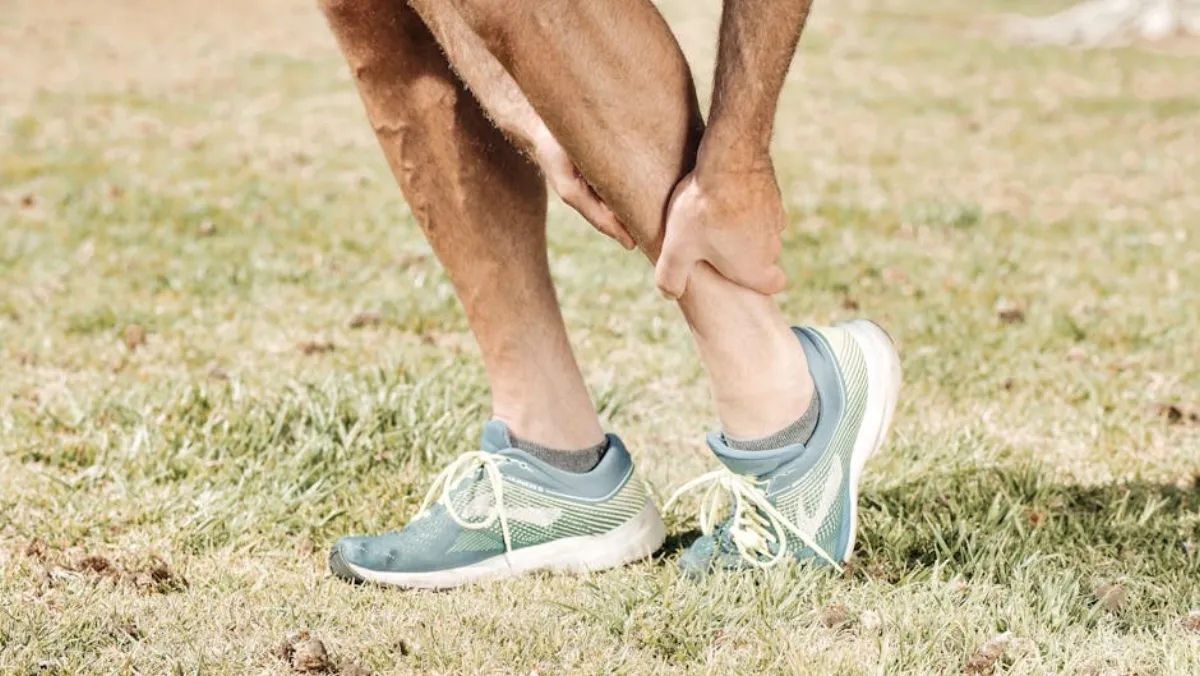
How Shockwave Therapy Works for Achilles Tendinopathy
Extracorporeal shockwave therapy (ESWT) addresses the core pathology of Achilles tendinopathy — failed tendon healing — by delivering controlled acoustic energy pulses directly into the degenerated tissue.
The mechanical stress from shockwave pulses triggers a cascade of biological responses. At the cellular level, shockwave energy stimulates tenocytes (the tendon-maintaining cells) to ramp up collagen production and begin remodeling the disorganized tissue matrix. In a healthy tendon, collagen fibers are aligned in tight, parallel bundles. In tendinopathy, they become tangled, weakened, and laden with abnormal ground substance. Shockwave therapy provides mechanobiological stimulation that restarts the repair process.
ESWT also promotes neovascularization — the formation of new blood vessels — in tissue that has a notoriously poor blood supply. The mid-portion of the Achilles tendon, in particular, has a watershed zone with reduced vascularity, which contributes to its susceptibility to chronic degeneration. By improving blood flow to this area, shockwave therapy creates a more favorable environment for healing.
The pain-modulating effects of ESWT are particularly relevant for Achilles tendinopathy. Chronic tendon pain involves both structural damage and neurological sensitization. Shockwave therapy disrupts pain signaling by reducing local concentrations of Substance P and calcitonin gene-related peptide (CGRP), neuropeptides that amplify pain transmission. (The evidence for CGRP reduction comes primarily from preclinical/animal studies, while Substance P reduction is better established in human research.) This helps break the cycle where pain leads to altered gait, which leads to abnormal tendon loading, which leads to further degeneration.
For Achilles tendinopathy, both focused shockwave (fESWT) and radial shockwave (rESWT) are used. The choice between them often depends on whether the tendinopathy is insertional (where focused energy may better reach the tendon-bone interface) or mid-portion (where radial shockwave can effectively cover the broader affected area). See our focused vs. radial comparison guide for more detail.
What the Research Says
Achilles tendinopathy has a robust evidence base for shockwave therapy, with multiple high-quality trials demonstrating its effectiveness — particularly when combined with eccentric loading programs.
Rompe et al., 2007 (American Journal of Sports Medicine): This randomized controlled trial compared low-energy radial shockwave therapy (rESWT) to eccentric loading exercises in 68 patients with chronic mid-portion Achilles tendinopathy who had failed previous conservative treatment. At four months, both groups showed significant improvement. The shockwave group achieved 64% excellent or good results compared to 52% in the eccentric loading group. Importantly, a follow-up study showed that combining both treatments produced superior outcomes to either alone.
Rompe et al., 2008 (American Journal of Sports Medicine): In a separate trial, Rompe investigated rESWT for insertional Achilles tendinopathy — a notoriously difficult subtype that responds poorly to eccentric exercises alone. At four months, 64% of the shockwave group achieved successful outcomes compared to 28% in the eccentric loading group. This study was significant because it demonstrated that shockwave therapy may be particularly valuable for insertional disease, where other conservative treatments often fail.
Furia, 2008 (Foot & Ankle International): Furia evaluated focused ESWT in 68 patients with chronic insertional Achilles tendinopathy. At 12 months, the ESWT group showed significantly greater improvement in VAS (Visual Analog Scale) pain scores and Roles and Maudsley scores compared to the control group. The study reported a 73% good-to-excellent outcome rate in the treatment group.
Rasmussen et al., 2008 (Scandinavian Journal of Medicine & Science in Sports): This double-blind, randomized trial compared focused ESWT to sham treatment in 48 patients with chronic Achilles tendinopathy. At four months, the ESWT group showed significantly greater improvement in AOFAS (American Orthopaedic Foot and Ankle Society) scores. Ultrasonographic evaluation showed reduced tendon thickness and improved tissue structure in the treated group.
Mani-Babu et al., 2015 (British Journal of Sports Medicine, systematic review): A systematic review of shockwave therapy for lower limb tendinopathies concluded that there is moderate-to-strong evidence supporting ESWT for chronic Achilles tendinopathy. The review noted that the best outcomes were achieved when shockwave was combined with an eccentric exercise program.
What to Expect During Treatment
A shockwave therapy session for Achilles tendinopathy is a straightforward outpatient procedure lasting approximately 15 to 20 minutes.
Your provider will first examine the tendon to determine the location and extent of involvement. For mid-portion tendinopathy, this typically means palpating for a thickened, nodular segment in the body of the tendon, 2-6 cm above the heel. For insertional tendinopathy, the focus is on the tendon’s attachment point at the back of the calcaneus. Some providers use ultrasound imaging to precisely identify areas of tendon thickening, neovascularization, or calcification.
You will be positioned lying face-down (prone) on the treatment table with your foot hanging off the edge or supported on a bolster. Ultrasound coupling gel is applied to the posterior ankle and heel area, and the shockwave applicator is placed directly over the affected tendon segment.
Treatment starts at a lower energy level and is gradually increased. You will feel a rhythmic pulsing or tapping sensation along the tendon. The intensity ranges from mildly uncomfortable in the surrounding area to moderately painful directly over the most damaged section of tendon. Most protocols deliver 2,000 to 3,000 impulses per session for radial shockwave. Your provider may adjust the applicator position during treatment to cover the full extent of the affected area.
After the session, you can walk immediately. Mild soreness, warmth, or redness at the treatment site is normal and typically resolves within 24 to 48 hours. Most providers recommend avoiding intense calf loading (sprinting, hill running, jumping) for 48 to 72 hours following each session.
Number of Sessions & Recovery Timeline
Standard protocols for Achilles tendinopathy:
Radial shockwave (rESWT): Three to five sessions, spaced one week apart. This is the most common protocol supported by the research literature.
Focused shockwave (fESWT): Three to four sessions, spaced one to two weeks apart. Higher energy per session allows fewer total treatments in some protocols.
Recovery timeline:
- Weeks 1-2: Mild soreness at the treatment site after each session. Avoid anti-inflammatory medications (NSAIDs) during the treatment course — they may interfere with the healing cascade that shockwave therapy is designed to trigger.
- Weeks 2-4: Initial improvements in morning stiffness and start-up pain (the pain you feel when first moving after rest). Some patients feel worse before they feel better; a temporary uptick in symptoms is not uncommon and does not indicate treatment failure.
- Weeks 4-8: Progressive improvement in pain with activity. Many patients can gradually increase walking distance and reintroduce low-impact exercise.
- Weeks 8-12: Most patients reach significant functional improvement. This is the standard outcome assessment point in clinical trials.
- 3-12 months: Continued tendon remodeling and strengthening. Full recovery from chronic Achilles tendinopathy is a gradual process.
Critical adjunct — eccentric exercise: Research consistently shows that the best outcomes from shockwave therapy for Achilles tendinopathy come when it is combined with a structured eccentric loading program (e.g., the Alfredson protocol). Your provider should prescribe a specific exercise protocol alongside your shockwave treatment. For more on combining therapies, see our guide on exercises to pair with shockwave therapy.
Cost & Insurance Coverage
Shockwave therapy for Achilles tendinopathy typically costs $250 to $500 per session, with a full course of three to five sessions running $750 to $2,500.
Insurance coverage reality: Because ESWT for Achilles tendinopathy is considered off-label (no specific FDA clearance for this indication), insurance coverage is uncommon. Most patients pay out of pocket. However, some insurers may consider coverage on a case-by-case basis with documentation of failed conservative treatment, particularly if the alternative is surgical intervention.
Cost context: The relevant comparison is not just the out-of-pocket price of shockwave therapy, but the total cost of the alternative pathway. For patients with chronic Achilles tendinopathy who fail conservative care, the next step is typically surgical debridement or repair — a procedure that costs $5,000 to $15,000 (before insurance), requires a cast or walking boot for 4 to 8 weeks, and carries a 6 to 12 month return-to-full-activity timeline with inherent surgical risks.
Payment strategies:
- Ask about package pricing — many providers offer a discounted rate when you pay for a full course upfront
- Some providers offer payment plans or accept HSA/FSA funds
- If you have out-of-network benefits, request a superbill with appropriate CPT codes and submit to your insurer
For a broader discussion of pricing across conditions, see our shockwave therapy cost guide.
Who Is a Good Candidate?
Shockwave therapy for Achilles tendinopathy is most appropriate for patients whose symptoms have become chronic and have not responded adequately to first-line treatments. You may be a good candidate if:
- You have had Achilles tendon pain for at least three months
- You have tried eccentric exercises, physical therapy, rest, and/or activity modification without sufficient improvement
- You have mid-portion or insertional Achilles tendinopathy confirmed by clinical examination (and ideally ultrasound or MRI)
- You want to avoid surgery or need a non-invasive option before considering operative treatment
- Your pain limits running, walking, or daily activities
Particularly strong candidates:
- Patients with insertional Achilles tendinopathy, which responds poorly to eccentric exercise alone but has shown good response to shockwave therapy in clinical trials
- Runners and athletes looking to avoid prolonged downtime associated with surgical options
- Patients who have already received corticosteroid injections near the Achilles tendon (which carry a risk of tendon rupture) and need a safer alternative
Contraindications — shockwave therapy should NOT be used if you have:
- A suspected or confirmed Achilles tendon rupture (partial or complete) — shockwave is for tendinopathy, not acute tears
- A bleeding disorder or are taking anticoagulant medication
- An active infection at or near the treatment site
- A tumor or malignancy in the treatment area
- Deep vein thrombosis (DVT) in the affected leg
- Had a corticosteroid injection into the Achilles tendon within the past six weeks
Important note on tendon rupture risk: There is no evidence that shockwave therapy at therapeutic energy levels increases the risk of Achilles tendon rupture. However, proper diagnosis is essential — if there is any suspicion of a partial tear, imaging (ultrasound or MRI) should be performed before starting treatment.
If you have been battling chronic Achilles tendon pain and conservative measures have plateaued, shockwave therapy is a well-supported, non-invasive treatment worth discussing with your provider.
Learn More
Explore our complete guide to shockwave therapy conditions or browse our latest research and articles to learn more about ESWT treatment options.
References
-
Rompe JD, Nafe B, Furia JP, Maffulli N. Eccentric loading, shock-wave treatment, or a wait-and-see policy for tendinopathy of the main body of tendo Achillis: a randomized controlled trial. Am J Sports Med. 2007;35(3):374-383. PubMed
-
Rompe JD, Furia JP, Maffulli N. Eccentric loading compared with shock wave treatment for chronic insertional Achilles tendinopathy: a randomized controlled trial. J Bone Joint Surg Am. 2008;90(1):52-61. PubMed
-
Furia JP. High-energy extracorporeal shock wave therapy as a treatment for insertional Achilles tendinopathy. Am J Sports Med. 2006;34(5):733-740. PubMed
-
Rasmussen S, Christensen M, Mathiesen I, Simonson O. Shockwave therapy for chronic Achilles tendinopathy: a double-blind, randomized clinical trial of efficacy. Acta Orthop. 2008;79(2):249-256. PubMed
-
Mani-Babu S, Morrissey D, Waugh C, Screen H, Barton C. The effectiveness of extracorporeal shock wave therapy in lower limb tendinopathy: a systematic review. Am J Sports Med. 2015;43(3):752-761. PubMed
Frequently Asked Questions
Is shockwave therapy FDA-approved for Achilles tendinopathy?
No. ESWT is currently used off-label for Achilles tendinopathy in the United States. However, it has strong clinical evidence supporting its effectiveness and is recommended in multiple international clinical guidelines for chronic Achilles tendon problems. Many providers routinely use it for this indication.
Does shockwave therapy work for both insertional and mid-portion Achilles tendinopathy?
Yes. Research supports shockwave therapy for both types, though the treatment approach differs slightly. Mid-portion tendinopathy (2-6 cm above the heel) tends to respond well to eccentric exercise combined with shockwave. Insertional tendinopathy (at the heel bone attachment) is generally harder to treat conservatively, and some studies suggest shockwave may be especially valuable for this subtype.
Can I run while getting shockwave therapy for my Achilles tendon?
Most providers recommend reducing high-impact activities like running during the treatment period. Light jogging may be reintroduced gradually after the second or third session if pain allows. Your provider will give you specific guidance based on your case, but a temporary reduction in training load typically produces the best treatment outcomes.
How does shockwave compare to PRP injections for Achilles tendinopathy?
Both shockwave therapy and platelet-rich plasma (PRP) injections aim to stimulate tendon healing, and limited head-to-head studies exist. Shockwave is non-invasive, has a larger evidence base for Achilles tendinopathy, and does not require a blood draw or injection into the tendon. Some providers use both sequentially for resistant cases.
What is the success rate of shockwave therapy for Achilles tendinopathy?
Studies report success rates ranging from 60% to 80% depending on the definition of success, the type of tendinopathy, and the follow-up period. In Rompe’s 2007 study, 64% of patients with chronic mid-portion Achilles tendinopathy achieved excellent or good results at four months. Success rates tend to be higher when shockwave is combined with eccentric loading exercises.
Continue Learning
Explore our other in-depth condition guides and patient resources to understand your treatment options.