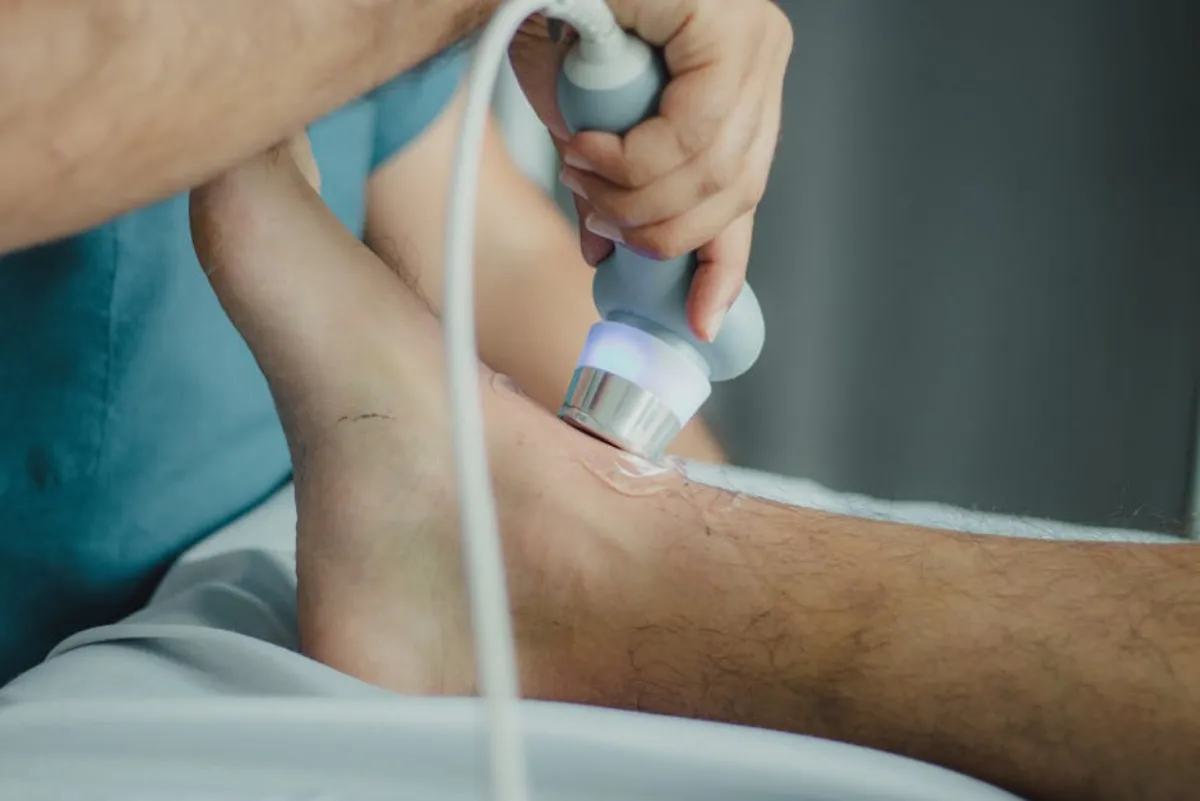
Both treatments involve a handheld device, a layer of gel, and sound energy directed at your injury. So it’s no surprise patients confuse shockwave therapy with therapeutic ultrasound. But these are fundamentally different treatments with different physics, different biological effects, and very different levels of clinical evidence. Understanding the distinction matters, because what works for your condition may depend on which modality your provider actually uses.
The Physics: Not Even Close
Extracorporeal shockwave therapy (ESWT) generates high-energy acoustic pressure waves – rapid pulses that reach the target tissue in microseconds. These waves create a focused mechanical impact. The energy levels are high enough to fragment kidney stones (that’s where the technology originated) and, at lower intensities, to stimulate biological healing responses in musculoskeletal tissues.
Therapeutic ultrasound generates low-energy continuous or pulsed sound waves at frequencies of 1-3 MHz. These waves penetrate tissue gently, producing mild thermal (heating) effects and subtle micro-mechanical vibration. The energy delivered is orders of magnitude lower than ESWT.
To put it simply: if shockwave therapy is a thunderclap, therapeutic ultrasound is a whisper. They both use sound energy, but the intensity, mechanism, and biological effects are entirely different.
How They Affect Tissue
ESWT’s biological effects include:
- Neovascularization – stimulating the growth of new blood vessels in damaged tissue
- Growth factor release – triggering production of proteins that promote tissue repair
- Collagen remodeling – breaking down disorganized scar tissue and stimulating organized collagen formation
- Pain modulation – disrupting pain signaling through gate control mechanisms and substance P depletion
These effects require meaningful energy delivery. The controlled microtrauma from shockwave therapy triggers an active healing response.
Therapeutic ultrasound’s effects are more modest:
- Gentle tissue warming – increasing local temperature by 1-4 degrees Celsius
- Increased circulation – modest blood flow improvement in the treated area
- Micro-massage – subtle mechanical vibration at the cellular level
- Improved tissue extensibility – making tissue more pliable before stretching or exercise
Therapeutic ultrasound creates a more passive, supportive environment. It doesn’t trigger the same magnitude of biological healing response that ESWT does.
What the Evidence Says
This is where the comparison becomes most clear-cut.
ESWT evidence is substantial. Multiple randomized controlled trials and systematic reviews support its effectiveness for conditions including plantar fasciitis, lateral epicondylitis, Achilles tendinopathy, and calcific shoulder tendinitis. The International Society for Medical Shockwave Treatment (ISMST) maintains evidence-based guidelines supporting ESWT for these indications.
Therapeutic ultrasound evidence is weak. A 2014 Cochrane review found insufficient evidence to support therapeutic ultrasound for most musculoskeletal conditions. For chronic lateral epicondylitis specifically, systematic reviews have concluded that therapeutic ultrasound provides little to no benefit beyond placebo (Dingemanse et al., 2014, British Journal of Sports Medicine). While therapeutic ultrasound remains widely used in physical therapy clinics, its clinical effectiveness has been increasingly questioned in the research literature.
This doesn’t mean therapeutic ultrasound is useless. It may provide modest benefits as part of a broader treatment plan – for example, warming tissue before manual therapy or stretching. But as a standalone treatment for chronic tendinopathy, the evidence is thin compared to ESWT.
Why the Confusion Exists
Several factors contribute to patients mixing up these treatments:
- Both use gel applied to the skin at the treatment site
- Both use a handheld probe that the provider moves over the area
- Both are called “ultrasound” colloquially – patients may hear “ultrasound treatment” and not realize which modality they received
- Both are non-invasive and performed in outpatient settings
- Some clinics use both and may not clearly explain which treatment they’re providing
If you’re receiving treatment and aren’t sure which modality you’re getting, ask your provider directly. The experience feels different: therapeutic ultrasound is typically painless, while ESWT produces noticeable pressure and discomfort during the session.
Diagnostic Ultrasound: A Third Category
Adding to the confusion, diagnostic ultrasound (ultrasonography) is an imaging modality – completely separate from both therapeutic options. Diagnostic ultrasound uses sound waves to create real-time images of soft tissues. Providers use it to visualize tendons, muscles, and other structures, often as part of the evaluation before recommending treatment.
Some providers use diagnostic ultrasound during ESWT to guide the shockwave device to the correct tissue depth. This is called ultrasound-guided shockwave therapy. It’s using imaging to improve treatment accuracy – not combining two treatment modalities.
Understanding the difference between focused and radial shockwave therapy is also relevant here, as the type of ESWT device affects treatment depth and application.
Choosing Between Them
For most chronic tendon conditions, the evidence favors ESWT over therapeutic ultrasound. If you’re dealing with stubborn plantar fasciitis, tennis elbow, Achilles tendinopathy, or calcific shoulder tendinitis, shockwave therapy has substantially more clinical support.
Therapeutic ultrasound may still play a supporting role – for example, as a warm-up modality before exercise or manual therapy within a broader physical therapy program. But as a primary treatment for chronic musculoskeletal pain, the evidence base is limited.
If your provider recommends “ultrasound treatment,” ask specifically which type. Knowing whether you’re receiving ESWT or therapeutic ultrasound helps you understand what to expect and how it fits into your overall treatment plan.
The Bottom Line
Despite surface similarities, shockwave therapy and therapeutic ultrasound are fundamentally different treatments. ESWT delivers high-energy pressure waves that stimulate active tissue healing, with strong evidence for chronic tendinopathies. Therapeutic ultrasound delivers low-energy sound waves with modest warming effects and weaker clinical evidence. If you’re seeking treatment for a chronic tendon condition, understanding this distinction can help you ask the right questions and ensure you’re receiving the modality that research supports.
References
- Dingemanse R, Randsdorp M, Koes BW, Huisstede BM. Evidence for the effectiveness of electrophysical modalities for treatment of medial and lateral epicondylitis: a systematic review. Br J Sports Med. 2014;48(12):957-965. PubMed
Medical Disclaimer: This content is for informational purposes only and does not constitute medical advice. Shockwave therapy outcomes vary by individual and condition. Consult a qualified healthcare provider to determine if shockwave therapy is appropriate for your situation.