You’ve got a knot in your shoulder that won’t release, or a tendon that aches every time you load it. Your provider mentions two options: shockwave therapy and dry needling. Both target muscle and tendon pain, both are used by physical therapists and other musculoskeletal providers, and both have a growing evidence base. But they work in fundamentally different ways, and the right choice depends on what’s driving your symptoms.
How Each Treatment Works
Extracorporeal shockwave therapy (ESWT) delivers acoustic pressure waves through the skin. A handheld device sends rapid pulses of mechanical energy into the targeted tissue – no penetration, no needle. For trigger points (tight, painful knots in muscle), the pressure waves disrupt the dysfunctional tissue, increase local blood flow, and alter pain signaling. For tendinopathy, ESWT stimulates a healing cascade including growth factor release and collagen remodeling.
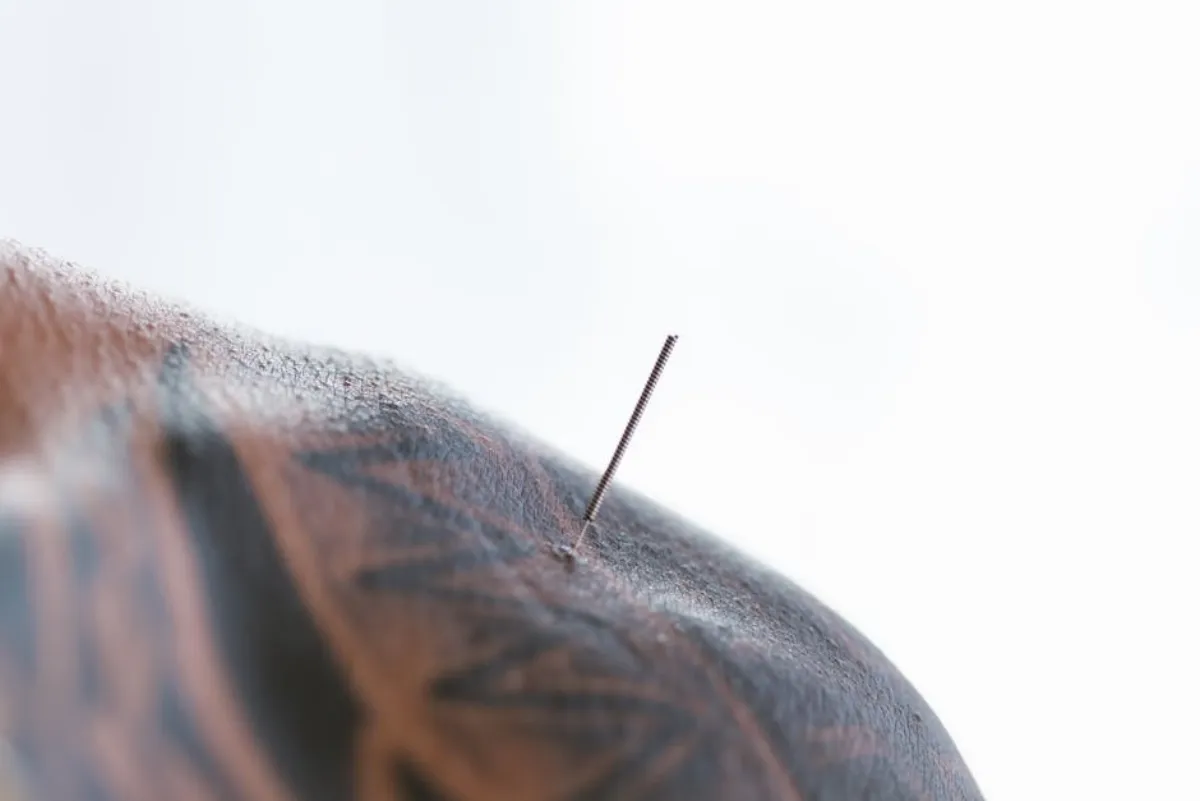
Dry needling inserts a thin filament needle directly into a myofascial trigger point. The needle provokes a local twitch response – an involuntary muscle contraction that releases the taut band. This mechanical disruption of the trigger point changes the local chemical environment, reduces muscle tension, and can produce immediate pain relief. For tendon conditions, some providers perform peritendinous needling (inserting the needle around the tendon) to stimulate a local healing response.
The key distinction: ESWT works from outside the body across a broader treatment area. Dry needling works from inside the tissue at a precise point.
What the Evidence Shows
Both treatments have moderate evidence for myofascial trigger point treatment. Neither has been definitively proven superior to the other.
A 2017 systematic review comparing ESWT and dry needling for myofascial pain found that both produced significant improvements in pain and function. The review noted that ESWT may have slight advantages for treating multiple trigger points simultaneously, while dry needling may be more effective for isolated, deep trigger points (Ramon et al., 2017, Journal of Back and Musculoskeletal Rehabilitation).
For tendinopathy, ESWT has a broader and deeper evidence base. Multiple RCTs support shockwave therapy for plantar fasciitis, lateral epicondylitis, Achilles tendinopathy, and other conditions. Dry needling’s evidence for tendinopathy is more limited, though growing.
The honest assessment: the research doesn’t clearly favor one over the other for trigger point pain. For tendon conditions, ESWT has more robust support.
The Patient Experience
How these treatments feel differs considerably.
ESWT session: Your provider applies gel to the skin and presses a handheld device against the treatment area. You’ll feel rhythmic pressure pulses – uncomfortable but tolerable for most patients. Sessions last 10-20 minutes. No needles. You can typically return to normal activities immediately, though heavy loading is often discouraged for 24-48 hours.
Dry needling session: Your provider inserts a thin needle through the skin into the trigger point. When the needle hits the target, you’ll likely feel a twitch response – a brief, involuntary muscle contraction that can feel like a cramp. The needle may be moved slightly to provoke additional twitches. Each trigger point takes 30-60 seconds. Some patients experience soreness for 24-48 hours afterward, similar to post-workout muscle soreness.
| Factor | Shockwave Therapy | Dry Needling |
|---|---|---|
| Invasiveness | Non-invasive (external) | Minimally invasive (needle) |
| Pain type | Sustained pressure/dull ache | Brief, sharp twitch response |
| Treatment area | Broader coverage per session | Precise, point-specific |
| Session duration | 10-20 minutes | 15-30 minutes |
| Post-treatment soreness | Mild, 1-2 days | Moderate, 1-2 days |
| Bruising risk | Low | Low to moderate |
When ESWT May Be the Better Fit
Shockwave therapy tends to be preferred when:
- Multiple trigger points or a broad area of muscle tension needs treatment – ESWT covers more tissue per session
- Chronic tendinopathy is the primary diagnosis, where ESWT’s tissue-healing effects have stronger evidence
- The patient is needle-averse – some people simply don’t tolerate needle insertion well
- Calcific tendinitis is present – ESWT can fragment calcium deposits, which dry needling cannot
- Accessibility – ESWT is available from a wider range of provider types and in more clinical settings
When Dry Needling May Be the Better Fit
Dry needling may be preferred when:
- A single, well-defined trigger point is the primary pain generator – the needle’s precision can target it directly
- Deep muscle trigger points that surface treatments may not reach effectively
- Immediate response is needed – dry needling can produce a rapid twitch response and quick tension release
- Cost constraints – dry needling is often less expensive per session (typically $50-$150 vs. $100-$500 for ESWT)
- Combined with physical therapy – many PTs offer dry needling as part of a comprehensive treatment session
Scope of Practice Considerations
One practical factor to consider: dry needling legality and scope of practice varies significantly by state. In some states, only physicians can perform dry needling. In others, physical therapists, chiropractors, and other providers have legal authority. Some states prohibit dry needling entirely for certain professions.
ESWT is generally available from a broader range of provider types with fewer regulatory restrictions, though this also varies by jurisdiction.
Asking about available treatment options during your initial consultation is a reasonable step, as many providers offer one or both modalities.
The Combination Approach
Some providers use both treatments together. A common approach is to use ESWT first to treat the broader muscle area and reduce overall tension, then follow with dry needling for specific trigger points that remain stubborn. This addresses both the wider tissue environment and the precise pain generators.
Research on this specific combination is limited, but the biological rationale is sound – the two treatments work through different mechanisms and can complement each other.
The Bottom Line
Shockwave therapy and dry needling are both evidence-supported options for myofascial trigger points and muscle pain. ESWT works externally across a broader area and has stronger evidence for tendinopathy. Dry needling works internally at precise trigger points and may produce faster localized relief. Neither is definitively superior for trigger point pain. Your choice may come down to personal preference (needles vs. no needles), the specific diagnosis, availability in your area, and your provider’s expertise. Many patients benefit from trying one and adding the other if needed.
References
- Ramon S, Gleitz M, Hernandez L, Romero LD. Update on the efficacy of extracorporeal shockwave treatment for myofascial pain syndrome and fibromyalgia. Int J Surg. 2015;24(Pt B):201-206. PubMed
Medical Disclaimer: This content is for informational purposes only and does not constitute medical advice. Shockwave therapy outcomes vary by individual and condition. Consult a qualified healthcare provider to determine if shockwave therapy is appropriate for your situation.