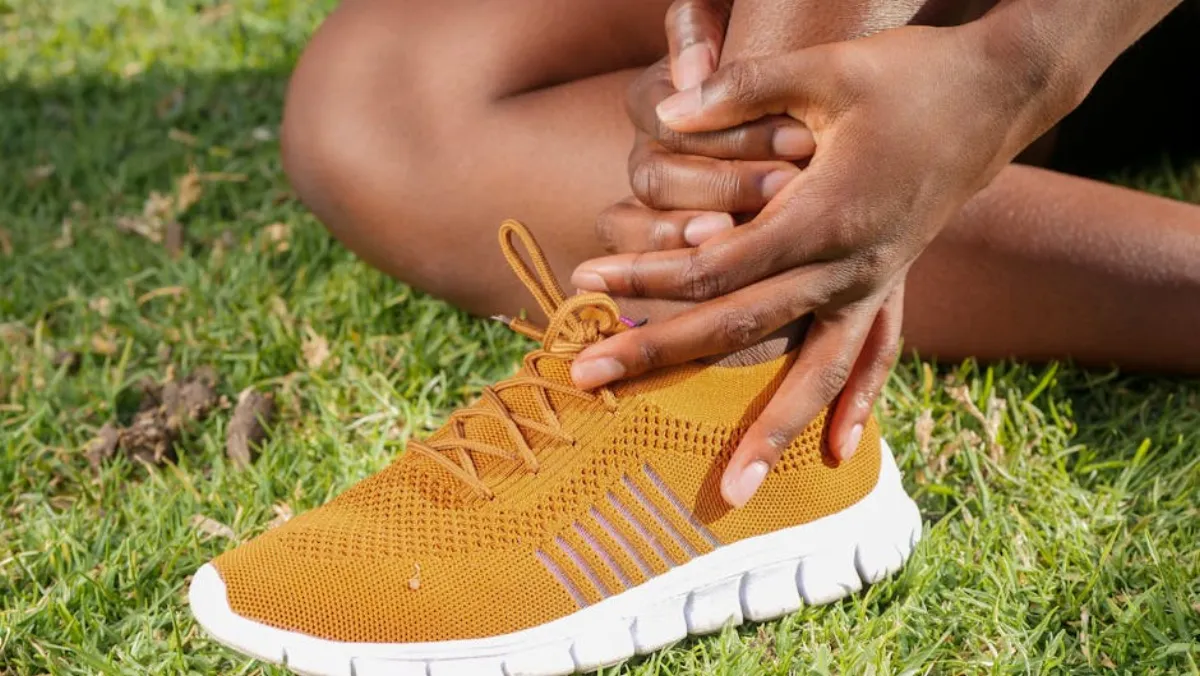
Your 14-year-old basketball player has been limping off the court with heel pain for six weeks. The pediatrician diagnosed Sever’s disease. Rest helps, but the pain returns every time she goes back to practice. A teammate’s parent mentions that shockwave therapy worked for their own plantar fasciitis. You start wondering: could this work for my kid too?
It’s a reasonable question – and one that requires a careful, nuanced answer. Extracorporeal shockwave therapy (ESWT) has a strong evidence base for adult musculoskeletal conditions, but the pediatric and adolescent population introduces a critical safety consideration that doesn’t apply to adults: open growth plates.
The Growth Plate Concern
Growth plates (epiphyseal plates) are areas of developing cartilage near the ends of long bones in children and adolescents. These plates are the sites where bone growth occurs. They are softer and more vulnerable to injury than mature bone, and they remain open until skeletal maturity – typically between ages 14 and 18, depending on the bone and the individual.
ESWT is generally contraindicated over open growth plates. This is a standard precaution recommended by the International Society for Medical Shockwave Treatment (ISMST) and most device manufacturers. The concern is that the mechanical energy from shockwave therapy could potentially disrupt the delicate growth plate tissue, affecting normal bone development.
It is important to note that this contraindication is based on theoretical risk and the precautionary principle – there are no documented cases of growth plate injury from ESWT in the published literature. However, the absence of documented harm reflects the fact that very few studies have examined ESWT in the pediatric population, not that safety has been established.
Common Adolescent Conditions and ESWT Applicability
The conditions that most frequently prompt parents to ask about shockwave therapy for their teenagers are growth-related apophysitis conditions:
Sever’s disease (calcaneal apophysitis). Inflammation at the growth plate on the back of the heel bone where the Achilles tendon inserts. This is the most common cause of heel pain in children ages 8 to 15. Because the condition involves the calcaneal growth plate directly, ESWT would need to be applied near or at the growth plate – making it a poor candidate for shockwave therapy in skeletally immature patients.
Osgood-Schlatter disease (tibial tuberosity apophysitis). Pain and swelling at the bony bump below the kneecap where the patellar tendon inserts. Common in active adolescents ages 10 to 15. Like Sever’s, this condition directly involves a growth plate, making ESWT application in this area problematic before skeletal maturity.
Little League elbow (medial epicondyle apophysitis). Pain at the inner elbow from repetitive throwing. The medial epicondyle growth plate is the site of pathology, again placing the treatment target near a growth plate.
The pattern is consistent: most of the conditions that drive interest in ESWT for adolescents are apophysitis conditions located at or near growth plates – precisely the areas where shockwave therapy is contraindicated in growing athletes.
What the Research Says (Limited Evidence)
The evidence base for ESWT in the pediatric and adolescent population is very thin:
- Most ESWT clinical trials explicitly exclude patients under 18. This means the evidence supporting ESWT effectiveness is based almost entirely on adult populations.
- A small number of case reports and case series have described ESWT use in adolescents, typically in patients near skeletal maturity (ages 16-17) with non-growth-plate conditions. These reports are too small to draw safety conclusions.
- No randomized controlled trials have evaluated ESWT in the pediatric population for any indication.
This evidence gap means providers cannot make evidence-based recommendations for or against ESWT in adolescents with the same confidence they can for adults. The default clinical position is caution.
When ESWT May Be Considered in an Adolescent
Despite the general contraindication, there are specific scenarios where some providers consider ESWT for adolescent patients:
After growth plate closure. Once X-ray confirms that the growth plates in the treatment area are closed, the primary safety concern is removed. A 17-year-old with confirmed skeletal maturity at the treatment site and chronic tendon pain unresponsive to conservative treatment may be a reasonable ESWT candidate. The clinical rationale becomes similar to an adult evaluation.
Treatment areas distant from growth plates. If the condition involves a soft tissue structure that is not located near an open growth plate – for example, a chronic myofascial trigger point in the upper back of a 16-year-old – the growth plate concern is less directly applicable. However, this still represents off-protocol use without pediatric evidence.
Reduced energy protocols. Some providers who treat near-skeletal-maturity adolescents use reduced energy settings and fewer pulses as an additional precaution. This approach has face validity but lacks clinical evidence to confirm either safety or effectiveness.
In all cases, parental informed consent should include a clear discussion of the limited evidence in the adolescent population and the theoretical growth plate concern.
Alternative Treatments for Growth-Related Conditions
The good news for parents: most growth-related conditions in adolescents have a favorable natural history. They typically resolve when skeletal maturity is reached and the growth plates close. In the meantime, effective management strategies include:
- Relative rest. Reduce the volume and intensity of the aggravating activity rather than complete shutdown. Cross-training with low-impact activities (swimming, cycling) maintains fitness.
- Stretching. Targeted stretching of the muscle-tendon unit involved (calf stretches for Sever’s, quadriceps stretches for Osgood-Schlatter) reduces tension on the growth plate.
- Supportive devices. Heel cups or cushioned insoles for Sever’s disease. Patellar tendon straps (infrapatellar straps) for Osgood-Schlatter. These reduce the mechanical load on the apophysis during activity.
- Ice after activity. 15 to 20 minutes of ice application after sports can manage inflammation and pain.
- Gradual return to sport. As symptoms improve, a structured return-to-activity plan prevents re-aggravation.
- Physical therapy. For persistent cases, a physical therapist can address biomechanical contributors, muscle imbalances, and training load management.
For guidance on how shockwave therapy is used for similar conditions in adults, see our pages on shockwave therapy for Achilles tendinopathy and patellar tendinopathy. A qualified provider can evaluate skeletal maturity and advise on treatment timing.
The Bottom Line
Shockwave therapy is contraindicated over open growth plates, which limits its use for the most common tendon and bone conditions affecting adolescent athletes. The pediatric evidence base for ESWT is extremely thin, and the standard clinical approach is precautionary. For growth-related conditions like Sever’s disease and Osgood-Schlatter, conservative management remains the appropriate first-line approach. Once skeletal maturity is confirmed by X-ray, adolescents with persistent symptoms may be evaluated for ESWT using the same criteria applied to adult patients. Parents considering ESWT for a teenager should discuss growth plate status and the limited evidence with their provider.
References
- Schmitz C, Császár NB, Milz S, et al. Efficacy and safety of extracorporeal shock wave therapy for orthopedic conditions: a systematic review on studies listed in the PEDro database. Br J Sports Med. 2015;49(9):590-595. PubMed
Medical Disclaimer: This content is for informational purposes only and does not constitute medical advice. Shockwave therapy outcomes vary by individual and condition. Consult a qualified healthcare provider to determine if shockwave therapy is appropriate for your situation.