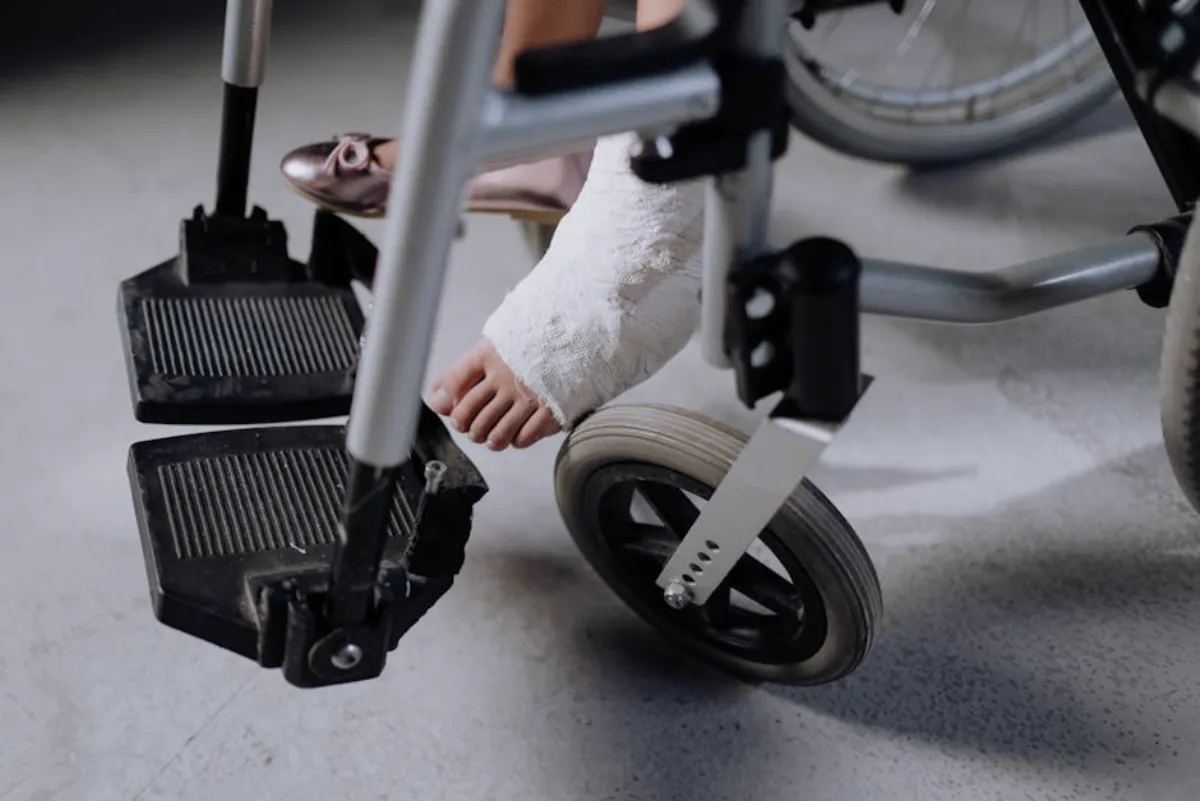
A broken bone that refuses to heal is a different kind of frustration than a sore tendon. You had the fracture, you did the immobilization, you waited – and months later, the bone still hasn’t knit together. Your orthopedist is now talking about surgical bone grafting.
This is the scenario where extracorporeal shockwave therapy (ESWT) has some of its most interesting bone-healing evidence. But the story gets more complicated when people confuse non-union fractures with stress fractures – two very different problems that require very different approaches.
Non-Union Fractures: When Bones Stop Healing
A non-union fracture is a fracture that has failed to show healing progress after 6-9 months. It happens in roughly 5-10% of all fractures, and the consequences are significant: persistent pain, disability, and often the need for additional surgery.
Non-unions occur for several reasons:
- Poor blood supply to the fracture site
- Inadequate immobilization or excessive movement at the fracture
- Infection at or near the fracture
- Smoking, diabetes, or nutritional deficiencies that impair healing
- Gap between bone ends that’s too large for bridging
Traditional treatment involves surgery – bone grafting, internal fixation hardware, or both. These procedures are effective but invasive, expensive, and require significant recovery time.
ESWT for Non-Union Fractures: Strong Evidence
One of the earliest medical applications of ESWT was stimulating bone healing, and this remains one of its better-evidenced uses. The biological mechanism is well-understood:
- Osteoblast stimulation. Shockwave energy activates osteoblasts (bone-building cells) at the fracture site, restarting the healing cascade.
- Neovascularization. ESWT promotes the growth of new blood vessels, improving blood supply to the stalled fracture – often the root cause of non-union.
- Growth factor release. Shockwave therapy triggers the release of bone morphogenetic proteins (BMPs) and vascular endothelial growth factor (VEGF), both critical for bone regeneration.
A landmark study by Cacchio et al. (2009, Journal of Bone and Joint Surgery) demonstrated that ESWT achieved radiographic union in approximately 71% of non-union long bone fractures, offering a non-surgical alternative for select patients.
Multiple subsequent studies have confirmed these findings, and the International Society for Medical Shockwave Treatment (ISMST) includes non-union fractures among the conditions with established evidence for ESWT.
Stress Fractures: A Different Problem Entirely
Here is where the critical distinction matters. Stress fractures are small cracks in bone caused by repetitive overuse – common in runners, military recruits, and athletes who rapidly increase training load. They are fundamentally different from non-union fractures.
Stress fractures are actively healing (or trying to). The treatment is straightforward: reduce the mechanical load, allow the bone to complete its healing process. Rest, activity modification, and sometimes a walking boot or crutches are the standard approach.
ESWT is generally contraindicated for acute stress fractures. Applying shockwave energy to a bone that’s already in the early stages of healing could theoretically disrupt the fragile repair process. There is no evidence supporting ESWT for fresh stress fractures, and it could delay recovery.
The Gray Zone: Delayed Union
Between a normally healing fracture and a non-union lies the delayed union – a fracture that’s healing more slowly than expected but hasn’t yet met the non-union threshold.
This is where some emerging evidence gets interesting. A few studies suggest ESWT may accelerate healing in delayed unions (fractures that show some healing but are behind the expected timeline at 3-6 months). The rationale is the same as for non-unions: boosting blood supply and osteoblast activity to jump-start a sluggish process.
However, the evidence here is limited, and the decision to use ESWT for a delayed union should be made by an orthopedic specialist who can assess whether the fracture is likely to heal on its own versus progressing to non-union.
Treatment Protocols for Bone Healing
ESWT for bone healing differs from the protocols used for soft tissue conditions like shin splints or tendinopathy:
- Energy level: Typically high-energy focused ESWT (not radial pressure waves)
- Session count: Often fewer sessions than tendinopathy protocols – sometimes 1-3 sessions
- Anesthesia: High-energy bone protocols may require regional or general anesthesia due to the intensity
- Setting: Usually performed in orthopedic referral centers, not outpatient PT or chiropractic clinics
- Follow-up: Serial X-rays to monitor bone healing over 3-6 months after treatment
This is a specialized application. If you’re exploring ESWT for a fracture that won’t heal, look for an orthopedic center with specific experience in high-energy shockwave applications.
The Bottom Line
Shockwave therapy has meaningful evidence for stimulating bone healing in non-union fractures and may offer a non-surgical alternative for select patients. However, it is not appropriate for acute stress fractures, which need rest and offloading. The distinction between these two conditions is critical, and ESWT for bone healing should only be pursued under the guidance of an orthopedic specialist.
Explore our condition guides to learn more about ESWT for musculoskeletal conditions.
References
- Cacchio A, Giordano L, Colafarina O, et al. Extracorporeal shock-wave therapy compared with surgery for hypertrophic long-bone nonunions. J Bone Joint Surg Am. 2009;91(11):2589-2597. PubMed
Medical Disclaimer: This content is for informational purposes only and does not constitute medical advice. Shockwave therapy outcomes vary by individual and condition. Consult a qualified healthcare provider to determine if shockwave therapy is appropriate for your situation.