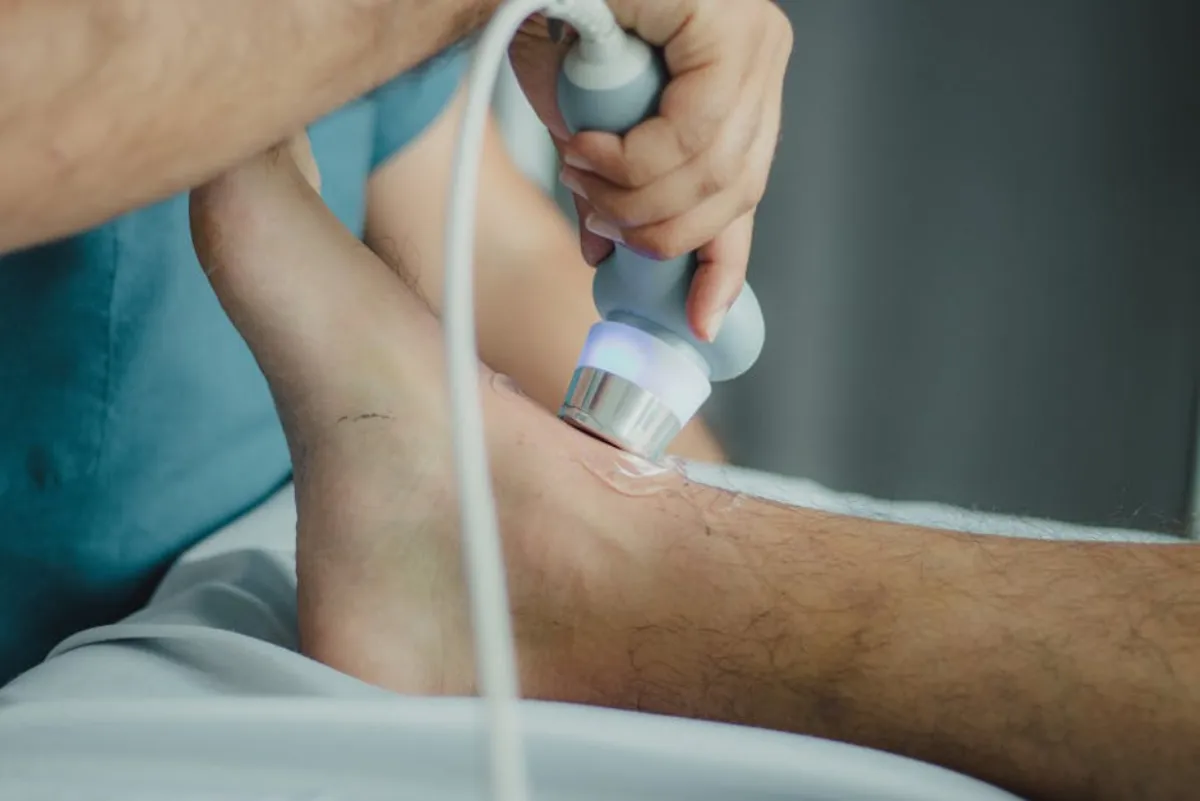
Forty million Americans live with chronic pain that lasts three months or longer. For many, the standard options feel inadequate: NSAIDs carry gastrointestinal and cardiovascular risks with long-term use, opioids bring dependence concerns, and cortisone injections offer diminishing returns with repeated use.
Against this backdrop, a growing number of patients and providers are turning to extracorporeal shockwave therapy (ESWT) – a non-invasive treatment that uses acoustic pressure waves to stimulate tissue repair – as a non-pharmaceutical option for specific types of chronic musculoskeletal pain. The approach is not a universal chronic pain solution. But for the right conditions, the evidence is meaningful.
Why Patients Are Looking Beyond Medication
The search for non-drug pain treatments is not a fringe movement. It reflects legitimate clinical concerns:
- NSAID limitations. Long-term use of ibuprofen and naproxen increases the risk of gastric ulcers, kidney damage, and cardiovascular events. For patients managing chronic pain over months or years, daily NSAID use is not a sustainable strategy.
- Opioid concerns. The opioid crisis has made both patients and providers more cautious about prescribing opioids for musculoskeletal pain. Guidelines from the CDC and major medical societies now recommend non-pharmacological treatments as first-line options for most chronic pain conditions.
- Desire for active treatment. Many patients want a treatment that addresses the source of their pain rather than simply masking it. ESWT’s mechanism targets tissue-level healing, which appeals to this preference.
How ESWT Modulates Chronic Pain
Shockwave therapy affects chronic pain through several biological pathways:
Substance P depletion. Substance P is a neurotransmitter involved in pain signaling. Research suggests that ESWT can deplete substance P levels in treated tissue, reducing the transmission of pain signals to the brain (Maier et al., 2003, Journal of Orthopaedic Research).
Neovascularization. ESWT stimulates the formation of new blood vessels (neovascularization) in the treated area. Chronic tendinopathies often involve poor blood supply to damaged tissue. Improved circulation supports the delivery of growth factors and nutrients needed for repair.
Mechanotransduction. The acoustic waves create mechanical stress at the cellular level, triggering biological responses that promote tissue remodeling. Cells convert this mechanical stimulus into biochemical signals that activate repair pathways.
Gate control modulation. High-frequency stimulation of nerve fibers during treatment may temporarily reduce pain perception through the gate control mechanism, where non-painful input closes the “gate” to painful input at the spinal cord level.
Which Chronic Pain Conditions Respond to ESWT
Research supports ESWT for chronic pain that originates from specific musculoskeletal structures. The strongest evidence exists for:
- Chronic tendinopathies. Plantar fasciitis, Achilles tendinopathy, lateral epicondylitis (tennis elbow), patellar tendinopathy, and calcific shoulder tendinitis all have clinical trial support.
- Myofascial trigger points. Localized muscle knots that produce referred pain patterns respond to both focused and radial shockwave therapy.
- Enthesopathies. Conditions where tendons insert into bone – such as greater trochanteric pain syndrome and proximal hamstring tendinopathy – have emerging evidence for ESWT.
- Chronic musculoskeletal pain without clear structural damage. Some providers report success treating chronic pain conditions like cellulite-related discomfort and nonspecific chronic back pain, though evidence in these areas is less robust.
A 2019 systematic review found that ESWT provided significant pain reduction in chronic musculoskeletal conditions, with effect sizes comparable to or exceeding those of corticosteroid injections at follow-up periods beyond 12 weeks (Liao et al., 2019, Medicine).
Which Chronic Pain Conditions Do NOT Respond
ESWT is not a universal pain treatment. It targets localized tissue pathology – not the nervous system dysfunction that drives certain chronic pain states:
- Neuropathic pain. Pain caused by nerve damage (diabetic neuropathy, postherpetic neuralgia) does not respond to the tissue-level mechanisms of ESWT.
- Centralized pain syndromes. Fibromyalgia and central sensitization involve amplified pain processing in the brain and spinal cord. ESWT’s peripheral tissue effects are unlikely to address this.
- Visceral pain. Pain from internal organs (chronic abdominal pain, pelvic pain syndromes) is outside the scope of ESWT application.
- Inflammatory arthritis. While ESWT may help with certain soft tissue components of joint pain, it does not treat the underlying autoimmune process in rheumatoid arthritis or similar conditions.
Realistic Expectations
Honesty about outcomes matters, especially for patients living with chronic pain who may have been disappointed by previous treatments.
What ESWT can offer: Meaningful pain reduction (studies typically report 40-70% improvement on pain scales), improved function, reduced reliance on pain medication, and sustained improvement lasting months to a year or more in many patients.
What ESWT cannot offer: Complete pain elimination in all cases, a cure for the underlying degenerative process, or a standalone solution for complex chronic pain. Most chronic pain management requires a multimodal approach.
Integrating ESWT with Other Non-Drug Treatments
The most effective chronic pain management strategies combine multiple non-pharmaceutical approaches. ESWT works well alongside:
- Physical therapy and exercise – active loading programs improve tendon structure and function
- Manual therapy – addresses biomechanical contributors to pain
- Cognitive behavioral therapy for pain – helps patients manage the psychological components of chronic pain
- Activity modification – reducing provocative loads while maintaining overall fitness
Providers increasingly position ESWT as one component of a comprehensive pain management program rather than a standalone cure.
The Bottom Line
Shockwave therapy represents a credible, evidence-based non-drug option for chronic musculoskeletal pain – particularly chronic tendinopathies, myofascial pain, and enthesopathies. It does not work for every type of chronic pain, and it works best when integrated with active rehabilitation and lifestyle modification. For patients seeking alternatives to long-term medication use, ESWT is worth discussing with a qualified provider.
References
-
Maier M, Averbeck B, Milz S, et al. Substance P and prostaglandin E2 release after shock wave application to the rabbit femur. Clin Orthop Relat Res. 2003;(406):237-245. PubMed
-
Liao CD, Tsauo JY, Chen HC, Liou TH. Efficacy of extracorporeal shock wave therapy for lower-limb tendinopathy: a meta-analysis of randomized controlled trials. Am J Phys Med Rehabil. 2018;97(9):605-619. PubMed
Medical Disclaimer: This content is for informational purposes only and does not constitute medical advice. Shockwave therapy outcomes vary by individual and condition. Consult a qualified healthcare provider to determine if shockwave therapy is appropriate for your situation.