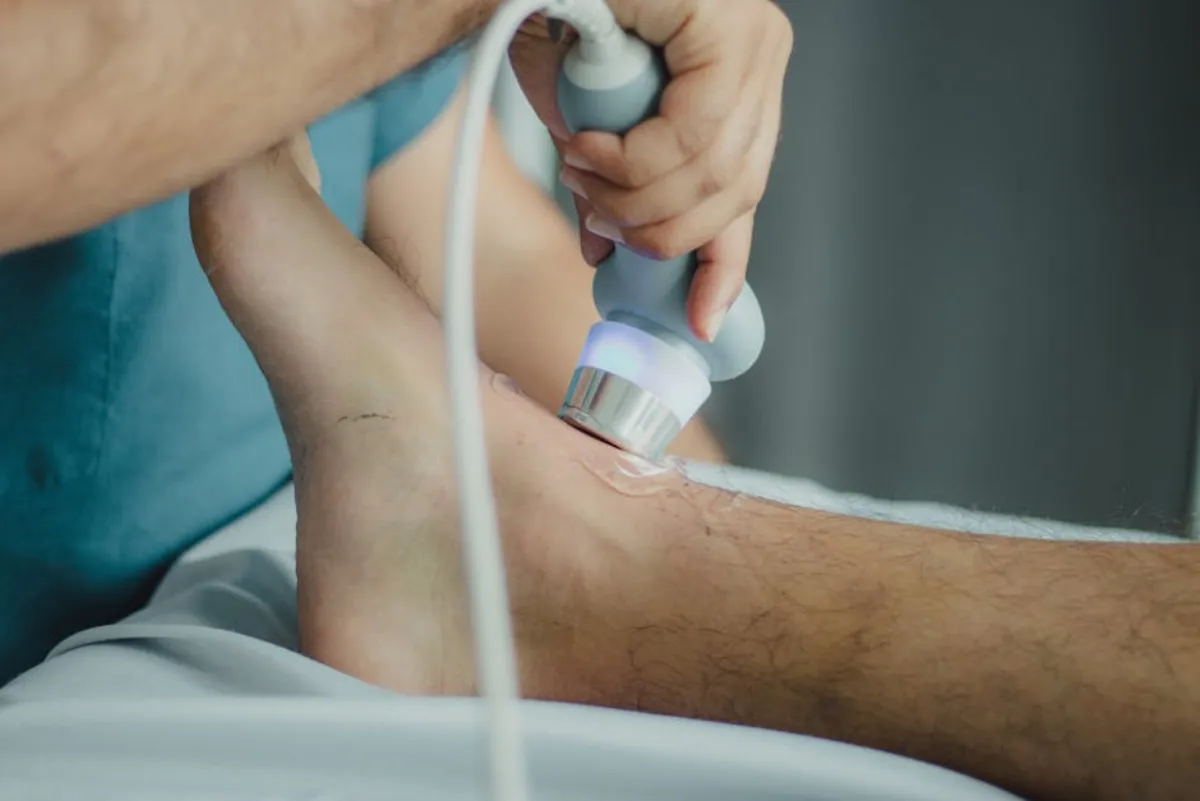
Key Takeaways
- Most musculoskeletal conditions require 3-6 sessions spaced 1-2 weeks apart; ED protocols run 6-12 sessions
- Sessions are spaced out because ESWT triggers a biological healing cascade (inflammation, neovascularization, collagen remodeling) that needs 7-14 days between treatments
- Focused ESWT may require fewer sessions than radial due to higher energy delivery per pulse
- Be cautious of providers selling 10+ session packages for standard tendon conditions without built-in reassessment
- Results continue developing 6-12 weeks after the last session -- don't judge outcomes too early
Your provider recommended shockwave therapy and you said yes. Now you want to know: how many sessions are we talking about? Three? Six? Twelve? And how do you know if someone is selling you more sessions than you actually need?
The answer depends on what you’re being treated for. Extracorporeal shockwave therapy (ESWT) protocols vary significantly by condition, device type, and the severity of your problem. Here’s what the clinical evidence actually supports – and how to tell whether your provider’s recommendation is in line with best practices.
Session Counts by Condition
The table below reflects the most commonly recommended protocols based on published clinical studies and guidelines from the International Society for Medical Shockwave Treatment (ISMST).
| Condition | Typical Sessions | Spacing | Notes |
|---|---|---|---|
| Plantar fasciitis | 3-5 | 1-2 weeks | Most studied condition; 3 sessions often sufficient with focused ESWT |
| Tennis elbow | 3-5 | 1 week | Similar protocol to plantar fasciitis |
| Achilles tendinopathy | 3-6 | 1-2 weeks | Insertional cases may require more sessions than midportion |
| Calcific shoulder tendinitis | 3-6 | 1 week | Focused ESWT preferred; sessions may continue until calcium deposit resolves on imaging |
| Patellar tendinopathy | 3-5 | 1-2 weeks | Often combined with progressive loading rehab |
| Hip bursitis / gluteal tendinopathy | 3-5 | 1 week | Radial shockwave commonly used |
| Erectile dysfunction | 6-12 | Twice weekly or weekly | Longer protocols standard; evidence still evolving |
These ranges aren’t arbitrary. They reflect the protocols used in the clinical trials that produced positive results. For example, the landmark Gerdesmeyer et al. study on plantar fasciitis used three sessions of focused ESWT spaced one week apart (Gerdesmeyer et al., 2008, American Journal of Sports Medicine).
Why Sessions Are Spaced Out (Not Done Daily)
If three sessions work, why not knock them all out in one week? Because ESWT isn’t like taking a pill – it triggers a biological cascade that needs time to unfold between treatments.
Here’s the simplified timeline between sessions:
- Days 1-3: Controlled inflammatory response at the treatment site. Growth factors are released.
- Days 4-7: Neovascularization (new blood vessel formation) begins in the damaged tissue.
- Days 7-14: Collagen remodeling starts. Disorganized scar tissue begins reorganizing into healthier fibers.
If you treat again before this process completes, you may disrupt the healing response rather than build on it. That’s why most protocols space sessions 1-2 weeks apart. Compressed schedules (e.g., three sessions in three days) have not shown equivalent outcomes in research.
Focused vs. Radial: Does Device Type Affect Session Count?
Yes, it can. Focused ESWT devices deliver higher energy to a precise depth, which may produce adequate stimulation in fewer sessions. Radial pressure wave devices spread energy more broadly and typically use lower energy per pulse, which sometimes means more sessions are needed for the same result.
In practice, many providers use radial devices (they’re more widely available and less expensive), and their session counts may trend toward the higher end of the ranges above. If your provider uses a focused device, you may complete your protocol in fewer visits.
This isn’t a quality judgment – both device types have clinical evidence supporting their use. But it’s worth asking your provider which type they use, since it helps you understand why they’re recommending a specific number of sessions.
How to Know If You’re Being Oversold
Shockwave therapy is a cash-pay treatment for most patients, which creates a financial incentive for some clinics to recommend more sessions than the evidence supports. Here are some things to watch for:
- Packages of 10+ sessions for a standard musculoskeletal condition (plantar fasciitis, tennis elbow, Achilles tendinopathy) without any planned reassessment. The clinical evidence rarely supports more than 6 sessions for these conditions.
- No reassessment protocol. A responsible provider will evaluate your progress after 3-4 sessions before deciding whether additional sessions are warranted.
- Pressure to commit upfront. Prepaid packages aren’t inherently problematic, but you should feel comfortable with the total session count before paying. Read more about shockwave therapy cost and insurance to understand typical pricing.
- Combining shockwave with every visit. If you’re seeing a provider for ongoing physical therapy or chiropractic care and they add shockwave to every session indefinitely, ask about the evidence supporting that approach.
The exception is shockwave therapy for erectile dysfunction, where protocols of 6-12 sessions are common and reflect the published research. Look for providers who specialize in specific conditions and follow evidence-based protocols.
When to Expect Results (It’s Not Immediate)
Even after completing all your sessions, don’t judge the outcome too quickly. ESWT triggers a healing process that continues for weeks to months after treatment ends.
Most patients begin noticing improvement 6-12 weeks after completing their protocol. Some feel better sooner, and some take longer. A 2017 systematic review found that outcomes continued to improve at 12-week and 6-month follow-up points, meaning the treatment was still working long after the sessions ended (Schmitz et al., 2015, British Journal of Sports Medicine).
If you’ve seen no improvement at all by 16 weeks post-treatment, it’s reasonable to discuss alternative approaches with your provider.
The Bottom Line
For most musculoskeletal conditions, evidence supports 3-6 shockwave therapy sessions spaced 1-2 weeks apart. Erectile dysfunction protocols run longer at 6-12 sessions. Be cautious of providers who recommend significantly more sessions than these ranges without clear clinical justification and built-in reassessment checkpoints. And remember – the real results often show up weeks after your last session, not the day you walk out of the clinic.
Explore Shockwave Therapy Condition Guides
References
-
Gerdesmeyer L, Frey C, Vester J, et al. Radial extracorporeal shock wave therapy is safe and effective in the treatment of chronic recalcitrant plantar fasciitis. Am J Sports Med. 2008;36(11):2100-2109. PubMed
-
Schmitz C, Császár NB, Milz S, et al. Efficacy and safety of extracorporeal shock wave therapy for orthopedic conditions: a systematic review on studies listed in the PEDro database. Br J Sports Med. 2015;49(9):590-595. PubMed
Medical Disclaimer: This content is for informational purposes only and does not constitute medical advice. Shockwave therapy outcomes vary by individual and condition. Consult a qualified healthcare provider to determine if shockwave therapy is appropriate for your situation.